
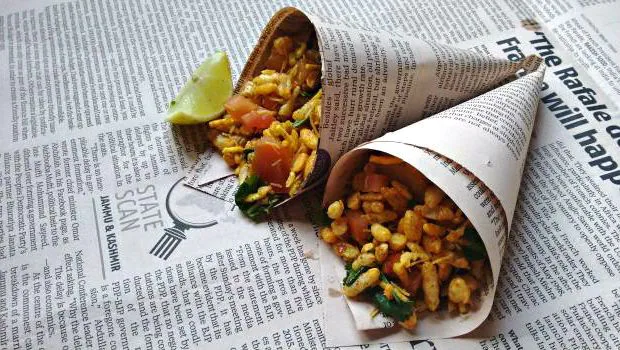
India’s food safety regulator, the Food Safety and Standards Authority of India (FSSAI), has once again directed food businesses across the country to stop using newspapers and other printed materials for food packaging, serving, and storage due to potential health risks.
The advisory, issued on June 5 through the Ministry of Health and Family Welfare, comes amid concerns that the practice remains widespread among street food vendors, restaurants, caterers, cloud kitchens, and small food retailers.
The renewed warning follows a recent incident in Mumbai where a popular vada pav vendor was found wrapping food in newspapers. A joint inspection conducted by FSSAI’s Western Region and the Brihanmumbai Municipal Corporation (BMC) resulted in regulatory action and awareness efforts to educate food vendors about approved food-contact packaging materials.
Food business operators have been advised to switch to food-grade paper, butter paper, or other food-safe packaging alternatives.
According to FSSAI, newspaper ink contains chemicals, pigments, binders, and colorants that may migrate into food. Printing inks can also contain heavy metals such as lead, which may pose health risks if consumed over time. In addition, newspapers may be exposed to dust, dirt, and microbial contamination during printing, transportation, and distribution, making them unsuitable for direct food contact.
The regulator emphasized that the use of newspapers for wrapping, serving, storing, or covering food is prohibited under the Food Safety and Standards (Packaging) Regulations, 2018. The prohibition also applies to the common practice of using newspapers to absorb excess oil from fried foods such as samosas, pakoras, and vada pav.
FSSAI has urged all food business operators to comply with packaging regulations and adopt safe, food-grade materials to protect consumer health and prevent contamination.
The directive highlights India’s continued focus on strengthening food safety practices and ensuring that food packaging materials do not become a source of chemical or microbial hazards,