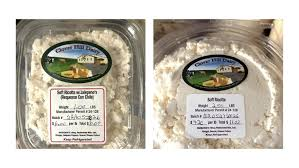
U.S. public health authorities are investigating a multi-state outbreak of Listeria monocytogenes infections linked to requeson cheese, a soft cheese similar to ricotta, manufactured by Clover Hill Dairy LLC.
According to the U.S. Food and Drug Administration (FDA), the outbreak has sickened eight people across Maryland, New York, and Virginia since 2023. Seven individuals have required hospitalization, and one death has been reported.
The outbreak investigation remains ongoing, and authorities warn that additional cases may be identified as testing continues.
The investigation intensified after the Suffolk County Health Department in New York identified two related Listeria infections within the same family. Both individuals reported consuming requeson cheese purchased from a local retailer in Brentwood, New York.
Subsequent testing conducted by the New York State Department of Agriculture and Markets found Listeria monocytogenes in a repackaged requeson cheese sample obtained from the retailer.
Whole Genome Sequencing (WGS) analysis confirmed that the bacterial strain detected in the cheese matched the strain responsible for the illnesses.
Further supply chain tracing identified Clover Hill Dairy LLC of Mechanicsville, Maryland, as the manufacturer of the implicated product.
Investigators later collected an unopened 18-pound sealed bucket of Clover Hill Dairy requeson cheese, which also tested positive for Listeria monocytogenes. Additional genomic analysis is currently underway.
On June 3, 2026, Clover Hill Dairy LLC voluntarily recalled its requeson and soft ricotta cheese products.
In response to the public health risk, the Maryland Department of Health has:
According to state officials, Clover Hill Dairy products were distributed through:
Products were sold in Maryland, New York, and Virginia and may have been relabeled under different brand names. Consumers are advised to look for the manufacturer permit number “24-128” on product packaging.
Some products may also contain flavor variations, including jalapeño and other seasonings.
Listeria monocytogenes is a dangerous foodborne pathogen capable of causing severe illness, particularly among vulnerable populations.
Those at highest risk include:
Symptoms of listeriosis may include:
Unlike many foodborne illnesses, symptoms can take up to 70 days to develop after exposure.
For pregnant women, infection may result in miscarriage, stillbirth, premature delivery, or life-threatening infection in newborns.
Consumers who purchased Clover Hill Dairy requeson or soft ricotta products should:
This outbreak highlights the elevated food safety risks associated with soft cheeses, particularly when contamination with Listeria monocytogenes occurs. Because the pathogen can survive and grow under refrigerated conditions, contaminated products can remain hazardous throughout their shelf life.
The incident also demonstrates the value of Whole Genome Sequencing (WGS) in modern outbreak investigations, enabling regulators to accurately connect clinical cases with contaminated food products and identify the source of infections across multiple states.
As the investigation continues, regulators and public health agencies are working to determine whether additional products or distribution channels may be affected.