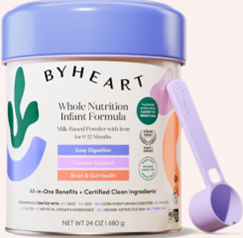
The US Centers for Disease Control and Prevention (CDC), in collaboration with the US Food and Drug Administration (FDA), continues to investigate a multistate outbreak of infant botulism linked to ByHeart Whole Nutrition Infant Formula. The outbreak was first identified in November 2025, with no new cases reported since December 10, 2025.
All ByHeart Whole Nutrition Infant Formula products have been recalled. This includes all lots of formula cans as well as single-serve “anywhere pack” sticks. ByHeart products account for approximately 1% of the total infant formula sold in the United States, and authorities have confirmed that this recall does not pose a risk of nationwide infant formula shortages.
Despite the recall, FDA has received reports that recalled ByHeart infant formula is still being found on store shelves and online platforms. The agency is working closely with state partners and retailers to ensure immediate removal of all recalled products, including items returned by customers.
Infant botulism is a rare but serious condition caused by Clostridium botulinum. Most affected infants initially develop constipation, poor feeding, loss of head control, and difficulty swallowing. These symptoms can progress to breathing difficulties and respiratory arrest. Symptoms may take several weeks to appear following ingestion of contaminated formula. Diagnosis is clinical, and the illness can be fatal if not treated promptly.
As of January 23, 2026, epidemiologic and laboratory evidence indicates that ByHeart Whole Nutrition infant formula is the source of this outbreak. Product sampling and testing are being conducted by the FDA, CDC, state partners, and ByHeart.
Two samples collected by the FDA tested positive for Clostridium botulinum toxin, Type A. One was a closed ByHeart powdered infant formula sample that genetically matched a clinical isolate from an affected infant, based on whole genome sequencing (WGS) analysis. These findings also matched two isolates detected in organic whole milk powder, an ingredient used by ByHeart in the production of its formula.
A second organic whole milk powder sample, collected by the FDA at a processor supplying ByHeart and analyzed by the New York Wadsworth Laboratory, also showed a genetic match to the Clostridium botulinum found in the finished ByHeart formula product. While these results strengthen the link between the ingredient and the finished product, FDA officials have stated that the investigation remains ongoing to determine the precise source and route of contamination.
Previously, on December 23, 2025, ByHeart reported positive test results for Clostridium botulinum in six of 36 finished product samples. These samples originated from two batches—Batch 251261P2 and Batch 251131P2—both of which were included in the initial recall.
Detection of Clostridium botulinum in infant formula and its ingredients is highly complex. The bacteria form heat-resistant spores that require special activation before detection. Testing involves multiple screening and confirmatory steps and can take several weeks to complete. Only a limited number of laboratories in the US have the specialized equipment and expertise required, which further constrains testing capacity. FDA is working with partners to improve and update testing methods to support faster confirmation and better comparison of results across laboratories.
According to the FDA, this is the first documented outbreak of infant botulism in the United States attributed to contaminated infant formula. The agency has highlighted key differences between spore-forming bacteria such as Clostridium botulinum and vegetative bacteria like Cronobacter and Salmonella, which are more commonly associated with powdered infant formula contamination. These differences are central to FDA’s ongoing response and future risk reduction strategies.
To support transparency and public awareness, FDA has launched a dedicated page outlining its actions to respond to Clostridium botulinum illnesses associated with powdered infant formula, along with general guidance on formula safety.
Parents and caregivers are advised to stop using any ByHeart infant formula products immediately. If an infant who consumed ByHeart formula shows symptoms such as poor feeding, loss of head control, difficulty swallowing, or reduced facial expression, immediate medical attention should be sought. Even in the absence of symptoms, caregivers should continue monitoring infants and consult healthcare professionals if symptoms develop.
Items and surfaces that may have come into contact with the formula should be thoroughly washed using hot, soapy water or a dishwasher. Retailers are instructed to ensure that all recalled products are removed from shelves and not resold under any circumstances.
Healthcare professionals who suspect infant botulism are advised to immediately contact the California Department of Public Health (CDPH) clinical support line for case consultation, which is available 24/7.
The FDA and CDC have confirmed that the investigation remains ongoing and that public advisories will be updated as new information becomes available.