
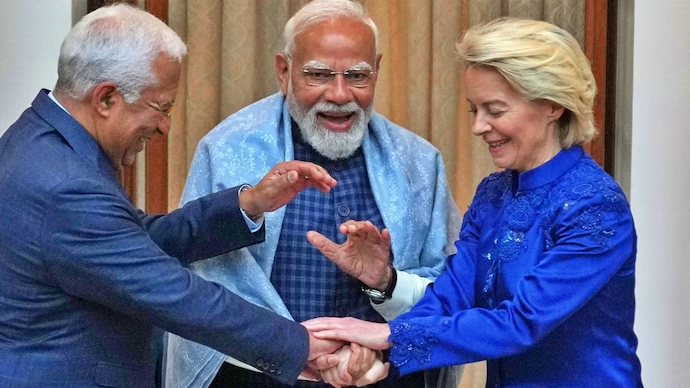
India has formally concluded its long-awaited Free Trade Agreement (FTA) with the European Union, marking a turning point for the country’s food import landscape. Finalised after nearly 18 years of negotiations, the pact will significantly reduce or eliminate tariffs on over 90 percent of EU exports to India, including a wide range of agricultural and processed food products.
The agreement is expected to reshape supermarket pricing, expand European food choices for Indian consumers, and intensify competition across premium food segments. According to official statements from Indian and EU authorities, the deal could save European exporters up to €4 billion annually in duties, while making imported foods more affordable for Indian households.
The India–EU Free Trade Agreement aims to dismantle high tariff barriers that have traditionally made European food products expensive in India. Currently, many EU-origin food items face import duties ranging from 30 to 55 percent, with some processed foods attracting tariffs as high as 50 percent.
Under the new agreement, these duties will either be phased out or sharply reduced, particularly for agri-food products. The move signals India’s growing integration into global food trade and aligns with rising domestic demand for premium, global food options.
Based on information released by the European Commission, the following food categories will benefit from tariff reductions:
One of the biggest winners under the agreement.
Olive oil imports from the EU will become fully duty-free, significantly lowering prices for premium and extra virgin varieties that have so far remained niche due to high costs.
A broad category set for complete tariff elimination.
Includes:
These products are expected to see immediate price corrections, making European processed foods far more competitive in Indian retail.
European fruit juices and select non-alcoholic beverages will now enter India duty-free, improving price accessibility and availability.
Fresh fruits from Europe, particularly kiwis and pears, are expected to see noticeable price drops under quota-based imports.
This reduction applies only to processed meat products, not raw meat imports.
EU-origin sheep meat will become duty-free, offering a major cost advantage to importers.
Lower tariffs are expected to translate into more affordable prices, greater product variety, and increased access to premium European foods. Items such as olive oil, bakery goods, chocolates, juices and imported fruits are likely to move from luxury shelves into more mainstream grocery baskets.
The deal could also encourage Indian consumers to experiment with global cuisines, as imported products become more accessible rather than occasional indulgences.
The hospitality and food-service industry is expected to benefit significantly from reduced import costs and more stable supply chains.
Chef Sandeep Yadav of La Soiree, Kolkata, noted that lower duties could allow fine-dining restaurants to use premium European ingredients without raising menu prices. According to him, this could support expanded wine pairings, Mediterranean dishes using high-quality olive oils, and richer dessert offerings.
Echoing this sentiment, Sukul Kundan, Format Director–Operations at Aditya Birla New Age Hospitality, highlighted the impact on wine imports. He said that lowering duties from 150% to the 20–30% range could make iconic European wines such as Chianti and Barolo far more accessible, enabling restaurants to rework wine-by-the-glass programmes.
Chef Jyotika Malick of Olive Cafe & Bar, Kolkata, described the deal as a structural shift in consumption. She said that more affordable cheeses and premium ingredients would allow chefs to experiment more, lower menu costs, and offer greater variety to diners.
While consumers stand to benefit, Indian brands may face increased competitive pressure as European imports become cheaper.
Deepanshu Manchanda, Managing Director at Zappfresh, said the agreement would ease pricing in categories such as cheese, olive oil and processed foods, particularly in urban retail and food-service markets. However, he noted that domestic producers in premium segments may face short-term challenges.
Retailers see opportunity alongside competition. Ashni Biyani, co-founder of Foodstories, said lower duties improve not just pricing but access and assortment depth, allowing retailers to offer better quality products with greater supply consistency.
Luxury gourmet retailers also welcomed the deal. A spokesperson from Marche Retail (P) Ltd, which operates the premium Le Gourmet format, described the agreement as a “structurally significant milestone” that strengthens sourcing links between European artisanal producers and India’s growing premium consumer base.
The India–EU trade deal marks a decisive step toward a more globally connected food market in India. With lower tariffs, wider choices and increasing consumer sophistication, the agreement is set to reshape how Indians shop, cook and dine—while redefining competition across the country’s premium food ecosystem.