
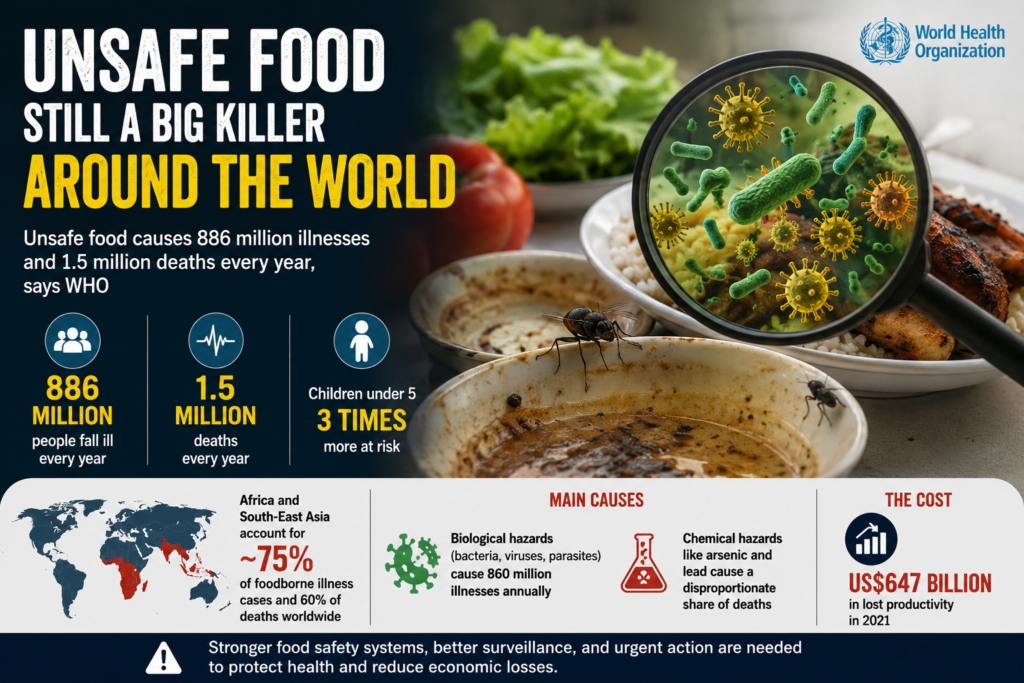
Unsafe food continues to pose a major global public health challenge, causing an estimated 886 million illnesses and 1.5 million deaths every year, according to new findings released by the World Health Organization (WHO).
The analysis, covering 194 countries between 2000 and 2021, highlights the persistent burden of foodborne diseases despite overall progress in reducing illness rates over the past two decades.
According to WHO, children under the age of five are particularly vulnerable, with young children nearly three times more likely to be affected by unsafe food than older populations.
“Food safety is not an abstract issue—it touches every meal, every family, every day,” said Tedros Adhanom Ghebreyesus, Director-General of WHO.
The report found that Africa and South-East Asia bear the greatest burden, accounting for nearly three-quarters of all foodborne illness cases and approximately 60% of related deaths worldwide.
Biological hazards, including bacteria, viruses, and parasites, were responsible for the vast majority of foodborne illnesses, causing around 860 million cases in 2021 alone. These pathogens can contaminate food at various stages of production, processing, distribution, and preparation.
While biological contaminants account for most illnesses, chemical hazards contribute disproportionately to mortality. The report identified arsenic and lead exposure as the leading non-biological causes of food-related deaths.
WHO also warned that emerging challenges such as climate change and antimicrobial resistance are increasing food safety risks globally.
According to Yuki Minato, a technical officer for food safety at WHO, climate change is contributing to higher contamination risks, while antimicrobial resistance is making foodborne infections more difficult to treat.
Beyond the public health impact, foodborne diseases also impose a substantial economic burden. WHO estimates that unsafe food resulted in approximately US$647 billion in lost productivity worldwide in 2021.
The findings underscore the need for stronger food safety systems, improved surveillance, and enhanced risk management measures across the global food supply chain to protect public health and reduce the growing economic costs associated with foodborne diseases.
Source:https://www.who.int/news-room/fact-sheets/detail/food-safety