
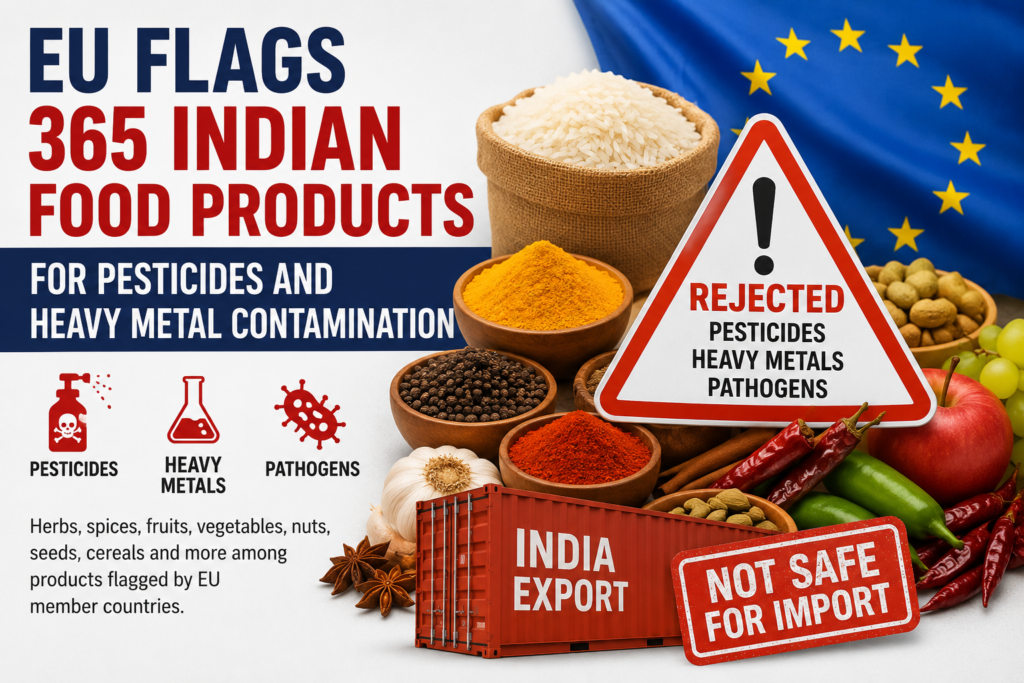
A review of data from the European Food Safety Authority (EFSA) and the European Commission has revealed that 365 Indian food products were flagged by European Union member states for excessive levels of pesticides and heavy metals between May 2024 and May 2026. Overall, more than 450 Indian products faced rejection or regulatory action during the two-year period due to various food safety concerns.
The majority of the affected products belonged to categories such as herbs and spices, fruits and vegetables, nuts and seeds, cereals, bakery products, and dietetic foods. In addition to chemical contamination, around 50 products were reportedly rejected because of microbiological hazards, including Salmonella, aflatoxin B1, and ochratoxin A. Some consignments were also found to contain environmental contaminants such as mineral oil residues.
Among the most frequently identified contaminants was chlorpyrifos, a pesticide that has been banned or heavily restricted in many countries due to concerns over its potential carcinogenic, neurotoxic, and genotoxic effects. The chemical was reportedly detected in approximately 135 Indian products.
Another significant finding was the presence of ethylene oxide in around 40 products. Although not registered for use in India, ethylene oxide has been linked to serious health concerns and has previously been associated with numerous international food recalls. Heavy metals including cadmium, lead, and mercury were also detected in several consignments.
The analysis found tricyclazole—a fungicide prohibited in the EU because of concerns about long-term health effects—in 53 products, primarily rice. Other pesticides linked to border rejections included monocrotophos, dichlorvos, and phorate.
In one case, Spanish authorities rejected a shipment of organic ashwagandha root after laboratory testing identified cypermethrin residues, raising concerns about pesticide contamination even in products marketed as organic.
Food safety and public policy experts have argued that the recurring notifications point to broader weaknesses in monitoring and traceability systems within the agricultural supply chain. They stress that contamination may occur at multiple stages, including cultivation, storage, processing, and transportation.
Experts also note that certain contaminants, such as ethylene oxide, are often associated with storage and post-harvest handling practices rather than direct farm-level pesticide application, highlighting the need for more comprehensive oversight across the entire food production chain.
The findings have renewed calls for stricter monitoring, improved traceability, and stronger enforcement of food safety standards for export-oriented products. Industry observers emphasize that maintaining compliance with international regulations is critical for protecting consumer health and preserving India’s reputation in global markets.
The latest data also follows earlier reports of hundreds of Indian food products being flagged by European authorities for contamination issues, underscoring the need for sustained corrective measures throughout the food supply chain.