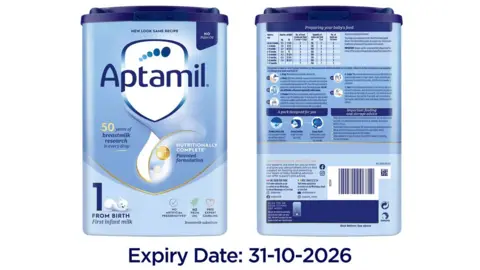
Danone has issued a recall of a specific batch of Aptamil First Infant Formula in the United Kingdom after the discovery of cereulide, a toxin that can cause vomiting and gastrointestinal illness in infants.
The Food Standards Agency (FSA) has confirmed that only one batch of the product is affected. Parents and caregivers have been advised not to feed infants using the impacted formula.
The FSA stressed that no other batches or Aptamil products are affected by this recall.
The recall was initiated after testing identified the presence of cereulide, a toxin produced by Bacillus cereus. According to the FSA, cereulide is unlikely to be destroyed by cooking or formula preparation, making the affected product unsafe for infant consumption.
Consumption of cereulide can lead to rapid onset of symptoms, including:
Nausea
Vomiting
Abdominal cramps
Jodie Wild, Head of Incidents at the FSA, stated that investigations have traced the contamination to a shared third-party ingredient supplier.
“As a result of these investigations, Danone is recalling one batch of Aptamil product due to the presence of cereulide,” she said.
The FSA later confirmed that the ingredient involved was arachidonic acid (ARA) oil, which is commonly added to infant formula to support growth and development and to mimic certain properties of breast milk.
Consumers who have purchased the affected batch are advised to:
Stop using the product immediately
Return it to the retailer for a full refund, with or without a receipt
Switch to an alternative infant formula
Parents who have already fed the product to their baby and are concerned are advised to contact their GP or NHS 111 for medical advice.
Earlier this month, Nestlé issued a global recall of selected infant formula batches over concerns related to the same toxin. Nestlé had also attributed the issue to an ingredient supplied by a third-party supplier.
The FSA said it is continuing to work closely with manufacturers to trace all products that may have used ingredients from the same supplier and to ensure that all affected products are removed from sale.
The incident highlights the risks associated with shared ingredient supply chains in the infant nutrition sector and underscores the importance of rigorous supplier controls and rapid regulatory action to protect infant health.