
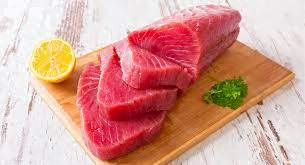
To combat food fraud, the European Commission set limit amounts for three additives in tuna. According to the Commission, the high concentrations put customers at risk of poisoning from histamine, also known as scombroid. Ascorbic acid, sodium ascorbate, and calcium ascorbate are used as antioxidants in tuna, however there are restrictions. At the end of this month, the regulation becomes effective. These food additives were previously used as part of good manufacturing practice at a level no higher than necessary to serve the intended function, providing the consumer was not deceived, and there was no maximum amount indicated for them.
National authorities have documented instances where tuna loins sold as fresh had additives in quantities greater than those deemed essential to produce the typical antioxidant effect on fresh tuna. These examples were discovered as a result of investigations into food fraud. Officials believe they are being applied to tuna before canning in order to restore the color and sell the seafood as fresh. The Commission stated that the use of the food additives in large quantities to artificially restore the color of fresh tuna flesh provides a chance to deceitfully market tuna for canning as fresh, selling it at a higher price, misleading consumers, and putting them at risk of histamine poisoning, also known as scombroid poisoning.
An investigation in 11 EU nations in 2018 discovered that tuna meant for canning had been unlawfully treated with chemical agents that altered its color to provide the appearance of freshness. Over 380 samples were taken, and 51 tons in total were seized. In 2020, 16 out of 29 tests on tuna in Belgium revealed ascorbic acid levels that were out of compliance.
Additive Limit:
Antioxidants aid in the prevention of flesh discoloration and rancidity in raw fish. The naturally red color of fresh tuna flesh is associated with freshness, according to consumers. Countries, led by Spain, requested that the Commission impose an upper limit for the antioxidant food additives in thawed tuna that is offered as fresh or marinated tuna. Thawed tuna loins must only be used for canning, while thawed tuna loins labelled as fresh tuna must be from tuna frozen below – 18 degrees C (- 0.4 degrees F) after fishing.
The greatest level the sector has ever recorded is 300 milligrams per kilogram as an upper limit, according to an earlier assessment from the European Food Safety Authority (EFSA).
There is no requirement for specific audits of Salmonella national control programs in 2023, based on the outcomes of past inspections and country compliance with EU poultry standards. Export restrictions is no longer seen as a top priority. Due to continuing regulatory disputes, there won’t be any audits of pesticide use that is sustainable.
Organic production controls and antimicrobial resistance monitoring in zoonotic and commensal bacteria will begin in 2023. Another area of emphasis will be the wellbeing of farm-raised fish and animals used for meat production.