
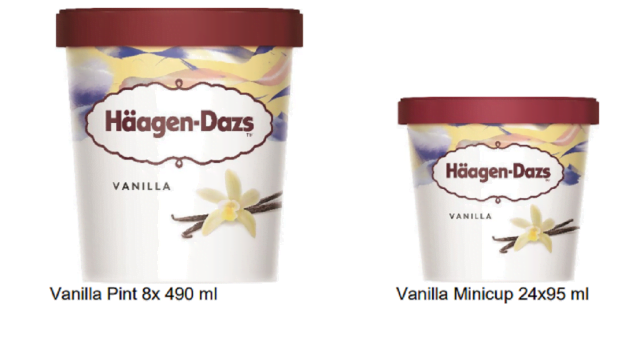
The European Commission plans to change the regulations regarding the presence of ethylene oxide in food additives. An assessment was made because of the problem of implementing present legislation resulting from a lack of readability on the supply of ethylene oxide in meal components. Within the EU, chemicals shouldn’t be allowed for use to disinfect meals. The recall of several Haagen-Dazs products containing Ethelene oxide (ETO) were recalled by an EU food safety Authority. The EU’s Rapid Alert System for Food and Feed system which last month detected 2-Chloroethanol in checks on some Haagen-Dazs products, triggering the recall of these products from EU member states
2-Chloroethanol is a compound found in ethylene oxide (ETO), a carcinogenic chemical used as a pesticide and cleaning chemical, and has properties that damage DNA.
Current EU rules state that ethylene oxide may not be used for sterilization purposes in food additives. However, there is no quantitative limit to its presence in all additives. A limit of no more than 0.2 mg/kg ethylene oxide has been set for some additives treated with the material.
There have been hundreds of RASFF notifications reporting results of ethylene oxide in a number of food additives used in the manufacture of a variety of foodstuffs.
To avoid these difficulties, the EU Commission said it was appropriate to say that the presence of ethylene oxide, regardless of origin, is not authorized for food additives.
The issue began in September 2020 with sesame seeds from India. In 2020, nearly all of the Speedy Alert System for Meals and Feed (RASFF) alerts have been associated with sesame seed merchandise, however in 2021 and 2022 quite a lot of objects have been reported, together with gum carob, guar gum, and xanthan gum from Turkey, meals dietary supplements and spices.
Closing the Gap in the present legislation
The EU place is that merchandise containing the additive locust bean gum containing ethylene oxide ought to be withdrawn or withdrawn from the market to guard the patron. It has led to hundreds of withdrawals. The latest instance is contaminated Basic Mills Häagen-Dazs ice cream that was distributed to some 80 nations.
Present EU guidelines state that ethylene oxide can’t be used for sterilization functions in meal components. Nonetheless, there isn’t any quantified restriction for its presence in all components. A restriction of no more than 0.2 mg/kg of ethylene oxide is about for some components handled with the substance.
There have been tons of RASFF notifications reporting findings of ethylene oxide in various meal components used to make quite a lot of meal merchandise.
The maximum ethylene oxide residue for food additives should be set at the quantification limit. This means the lowest residue concentration that can currently be measured and reported through routine monitoring using approved control methods.
The new rules state that no residue higher than 0.1 mg/kg of ethylene oxide – the sum of ethylene oxide and 2-chloroethyl expressed as ethylene oxide – must be present in food additives listed in EU legislation, including mixtures of food additives. .
The regulation, which takes effect beginning in September, was backed by the new Division of Food Safety and Toxicology of the Standing Committee on Plants, Animals, Food and Feed in March.
The maximum level may also be re-examined in the future, based on technological advances in achieving lower limits for quantification by routine analytical methods by laboratories in the European Union.
A review was undertaken due to the challenge in implementing the current law due to the lack of clarity on the source of ethylene oxide in food additives.