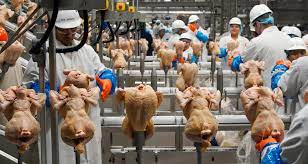
The Food Safety and Inspection Service (FSIS) of the U.S. Department of Agriculture (USDA) has today published a proposed regulatory framework for a novel approach to manage Salmonella contamination in poultry products and lower foodborne illnesses linked to these products. On November 3, 2022, the agency will organize a virtual public hearing to gather feedback on the suggested framework from interested parties.
The Centers for Disease Control and Prevention (CDC) calculates that each year in the United States, Salmonella germs result in over 1.35 million people infections and 26,500 hospitalizations. Over 23% of the infections are linked to eating poultry. People’s lives can be drastically affected by foodborne disease, both personally and financially, with economic repercussions. According to data from the USDA’s Economic Research Service (ERS), foodborne Salmonella infections cost the US economy an astounding $4.1 billion yearly in medical expenses and $88 million in lost productivity. These expenses are actual costs to actual individuals and they ought to be avoided.
According to Consumer Reports, the fact that chicken is frequently reared in crowded, dirty circumstances contributes to the widespread salmonella infection of poultry. For instance, a recent CR research discovered that salmonella was present in roughly one-third of the ground chicken samples analyzed.
USDA Deputy Under Secretary Sandra Eskin stated, “We recognize that Salmonella in chicken is a complex problem with no single solution. However, we’ve identified a number of strategic steps FSIS might take to reduce Salmonella illnesses associated with the consumption of poultry products, and we’re putting those in this suggested framework.
According to Amanda Craten, a board member of STOP Foodborne Illness, “this is a historic first step toward final product standards that are science-based, risk-based, enforced, and effective at protecting our vulnerable loved ones.” In order to ensure that no child has to face the devastation of an avoidable, virulent Salmonella disease, I have fought for and participated in the process to modernize chicken standards. My child suffered from Salmonella illness and was permanently injured. I’m grateful that USDA is emphasizing the need to prevent illnesses like the one that my kid Noah has.
Months of information collection and talks with a variety of stakeholders, researchers, and scientists helped to create the suggested framework. The proposed framework is made up of three essential parts that support a thorough strategy for reducing Salmonella in poultry.
The FSIS is thinking about mandating that flocks arriving at an enterprise be tested for Salmonella before entry and that Salmonella be characterized as a risk reasonably likely to occur at receiving.
This method requires that the flock satisfy a predefined target for Salmonella at receiving, which could be establishment- or industry-specific, and that the establishment prove that its subsequent process will successfully reduce Salmonella so that the product will meet the final product standard. Salmonella gets into a place of business in and on the birds. This segment aims to encourage the implementation of pre-harvest interventions that lessen the danger of a certain serotype entering the establishment or lower the degree of incoming Salmonella infection.
This strategy would give the industry flexibility to adopt the techniques that will help manage Salmonella in each unique operation rather than requiring the industry to implement any specified pre-harvest interventions. Establishments are urged to collaborate with their suppliers and contractors so that they are using the best techniques to lessen the risk of Salmonella in breeding facilities, hatcheries, grow-out, and during shipping.
The FSIS’s prevention-based approach to food safety, Hazard Analysis, and Critical Control Point (HACCP) is the foundation of the second element of this suggested framework. The current guidelines for indicator organism testing for process control may be modified by FSIS, and additional parameters may be established to precisely define the necessary data analysis. This is done to assure pathogen control throughout the slaughter and processing processes. Establishments may be compelled to test for indicator organisms as part of the proposal.
The FSIS is determining whether specific concentrations or varieties of Salmonella in raw poultry products pose an enhanced risk of infecting humans and should therefore be regarded as adulterants. In order to prevent the sale of products infected with Salmonella that are likely to make people ill, the agency is thinking about introducing a final product standard or standards.
FSIS regulations should forbid the entry of products with high levels of contamination and/or particular serotypes into commerce in order to protect public health. Salmonella would be classified as an adulterant, achieving this objective. FSIS would rely on standards used for STECs to make this determination. These requirements include taking into account serotypes linked to human illness, a low infectious dose, the seriousness of human illnesses, and customary consumer cooking procedures.
The co-director of the Minnesota Integrated Food Safety Center of Excellence and professor at the University of Minnesota School of Public Health, Dr. Craig Hedberg, concurs that this approach “is an essential step towards transitioning away from hazard-based regulation toward risk-based regulation.” The frequency of illnesses linked to chicken should be decreased by concentrating on levels of Salmonella and extremely virulent strains of Salmonella rather than just the presence or absence of Salmonella.
According to Dr. Angie Siemens, Vice President of Food Safety, Quality, and Regulatory at Cargill, “Cargill supports the need to adopt a public health risk-based approach to help fulfill the Healthy People 2030 Salmonella targets in line with our strong commitment to food safety. We are eager to evaluate the FSIS Salmonella framework and have a fruitful discussion about this.
The open meeting is open to stakeholders from businesses, consumer advocacy groups, and other sectors. To attend the meeting, attendees must register in advance. Visit the Meetings and Events page on the FSIS website to see the agenda and sign up to attend.
In addition to the public meeting, FSIS is looking for written comments to be submitted to the meeting docket that was published in the Federal Register. Before moving forward with any suggested modifications to rules or other measures, FSIS will take into account the feedback and data received on the proposed framework.
Every day, SDA has a beneficial impact on all Americans’ lives in a variety of ways. The USDA is transforming America’s food system under the Biden-Harris administration with a greater emphasis on more resilient local and regional food production, fairer markets for all producers, ensuring access to safe, healthy, and nutritious food in all communities, creating new markets and streams of income for farmers and producers using climate-smart forestry practices, making historic investments in infrastructure and clean energy capabilities in rural America, and a host of other initiatives.