
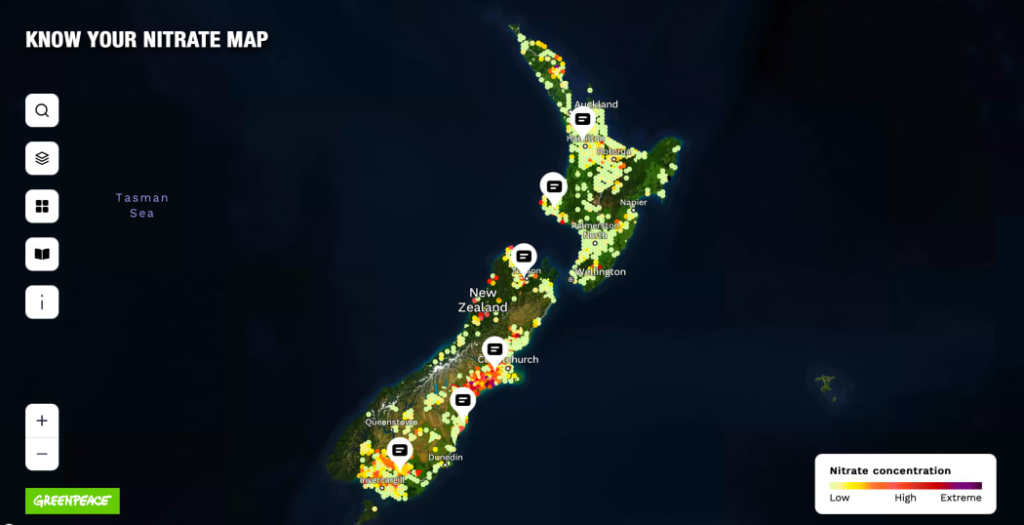
In a significant move addressing the potential health risks posed by nitrate contamination in drinking water, Greenpeace Aotearoa has introduced the “Know Your Nitrate” map—an interactive tool allowing New Zealanders to assess nitrate levels in their local water sources. The initiative follows alarming data from Otago University scientists, indicating that around 800,000 individuals in New Zealand are at risk of consuming water with hazardous nitrate levels. Nitrate, being both odorless and tasteless, has been identified as the most pervasive water contaminant in the country. Greenpeace has conducted free nitrate testing for two years, compiling a dataset that sheds light on nitrate levels in household bore water supplies.
The map particularly highlights the vulnerability of rural communities, where residents, often reliant on bore water, may unknowingly be exposed to hazardous nitrate levels. Russel Norman, the Executive Director of Greenpeace Aotearoa, stressed the potential risks faced by many rural families who may be consuming nitrate-contaminated water without awareness. It is emphasized that direct testing of bore water is essential, as testing tap water remains the most reliable method for determining nitrate exposure.
The data integrated into the Greenpeace map primarily stems from self-supply bore users in rural areas at risk of heightened nitrate exposure. Notably, the map also reveals instances of significant public water supplies exceeding health risk limits, affecting areas such as Richmond, Gore, Rolleston, and Kaikohe.
Greenpeace calls for political action to mitigate nitrate contamination, pinpointing cow urine and synthetic nitrogen fertilizers as the major sources. The organization urges all political parties to reduce the use of synthetic nitrogen fertilizers and lower dairy cow stocking rates to protect drinking water. The initiative seeks to inform the public about the potential health hazards associated with nitrate contamination and advocates for a collective effort to address and mitigate the risks, safeguarding the well-being of New Zealanders. The emerging health concerns related to nitrate exposure, including colorectal cancer and pregnancy impacts, are highlighted, emphasizing that risks are observed at levels lower than those set by the World Health Organization standards.
Source:https://maps.greenpeace.org/maps/aotearoa/know-your-nitrate/
Photo: Greenpeace Aotearoa