
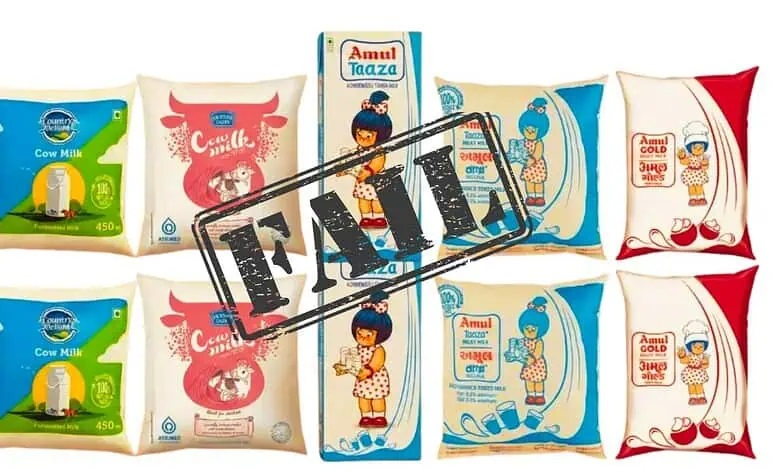
Milk is one of the most essential foods in Indian households — consumed daily by children, elders, and families through tea, coffee, curd, and breakfast staples. However, a recent investigation has raised serious concerns over the microbiological safety of milk sold by some of the country’s most trusted dairy brands.
An independent laboratory testing initiative, Trustified, has reported that milk samples from popular brands such as Amul, Mother Dairy, and Country Delight failed to meet key microbiological quality parameters, sparking public concern about consumer safety and regulatory accountability.
Trustified conducted microbiological testing on milk samples to assess:
These indicators are widely used to evaluate hygiene conditions during milk processing and storage.
According to food safety experts, while coliform bacteria may not always be directly harmful, their presence indicates possible contamination and increases the likelihood of other disease-causing pathogens being present.
The Food Safety and Standards Authority of India (FSSAI) prescribes limits to ensure milk remains safe for consumption.
The investigation reported that Mother Dairy cow milk recorded:
This is nearly eight times higher than the FSSAI-prescribed limit of:
Such elevated microbial counts may suggest lapses in hygiene, cold chain maintenance, or processing controls.
Country Delight, a brand known for its marketing claims of delivering “fresh milk straight from farms,” also reportedly failed the microbiological benchmark.
Trustified found:
This is double the permissible limit set by FSSAI.
The findings raise questions about whether aggressive branding is masking deeper issues in quality control.
In Amul’s case, the major concern was coliform contamination.
Trustified reported coliform levels as:
Both values were said to be above FSSAI-mandated safe limits, indicating potential hygiene lapses in handling or packaging.
The issue does not appear limited to milk alone.
In January 2026, Trustified also tested Amul Masti Dahi, reporting:
These results suggest broader concerns regarding food safety compliance in dairy-based products.
Amul reportedly refuted the findings, claiming that their products meet all regulatory standards. Meanwhile, FSSAI has not issued an official statement regarding these reports.
The investigation further mentioned another widely used household product — eggs.
Trustified claimed that Eggoz Nutrition India samples showed traces of AOZ (3-amino-2-oxazolidinone), a compound banned in many countries due to its potential long-term cancer risks.
The findings were shared in a video uploaded to Trustified’s YouTube channel in December 2025.
Brands like Amul, Mother Dairy, Country Delight, and Eggoz are not niche premium products — they are everyday essentials available in nearly every supermarket and kirana shop across India.
Milk, curd, and eggs are staples in Indian diets, not luxuries.
Amul, established in 1948, is more than a brand — it represents trust built across generations. Therefore, reports of safety failures leave consumers questioning:
Food safety experts emphasize the need for:
Until official regulatory clarification is provided, the findings have intensified public debate over the safety of everyday food products in India.
When the milk consumed daily by millions comes under scrutiny, it becomes more than a quality issue — it becomes a national concern about trust, health, and accountability in India’s food system.
Consumers now await clear responses from both the companies involved and India’s food safety regulator.