

You might have been scanned using facial recognition technology if you visited Pak’nSave, New World, or Four Square supermarkets in the North Island. The technology is currently in use in 29 North Island stores.
In New Zealand, A facial recognition technology (FRT) is employed by Foodstuffs in a few of its North Island outlets. They are testing the effectiveness of the technology to see if it can reduce crime. 29 North Island Foodstuffs like Pak’nSave, New World, and Four Square were using this technology.
The retail chain is receiving criticism for employing the technology; therefore, the use of facial recognition is expanding. Jon Duffy, the chief executive of Consumer, stated that Consumer questioned whether gathering customer data was appropriate given the risk that Foodstuffs was attempting to mitigate. He also questioned the value of five days of data retention in reducing crime.
According to the cooperative, the technology will only be used with the specific and limited objective of proactively targeting and reducing theft, burglary, robbery, assault, and other aggressive, violent, or threatening behavior by repeat offenders. At store doors, a signpost will also be put up using facial recognition technology.
Everybody in the store is checked as part of FRT, and if somebody is identified as having a high risk, they are added to a risk registry. Our main concerns are with how people register, how long that information is kept, and how to get off, according to Deputy Privacy Commissioner Liz MacPherson. Foodstuffs indicated that an FRT experiment would commence soon and last for the first six months in around 30 North Island outlets.
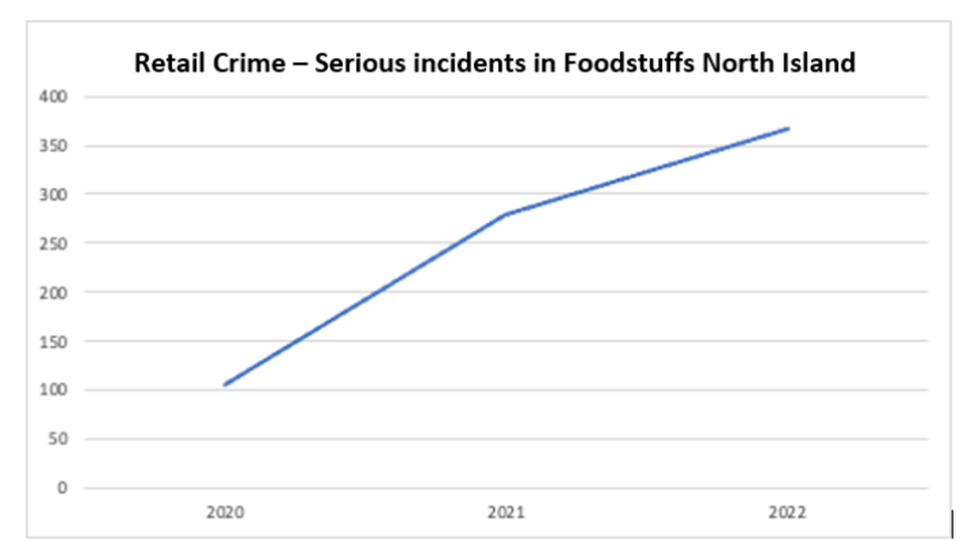
Chief Executive Officer of Foodstuffs North Island Chris Quin stated that statistics from the company showed that a significant portion of serious offenses in the stores was committed by repeat offenders. According to Quin, the number of grocery store incidents has increased dramatically since the beginning of the year, with serious cases up by 246% since the pandemic’s beginning and 30% more cases than the previous year. Over 2500 out of 9700 offenders were likely to commit new offenses this year. He said we have an obligation to safeguard our teams’ and customers’ security.
Artificial Intelligence:
Artificial intelligence software recognizes and maps facial traits to create a faceprint, which is then compared to faceprints in a database to determine whether there is a match. In short, it involves identifying a person by examining their facial traits. According to Foodstuffs, the images were only saved for a maximum of five days and the information was solely utilized to prevent crime.
Our physiological characteristics can be converted into data points via FRT-capable cameras, making us easily recognizable. And without our awareness or consent, our data can be collected and analyzed as we move through a city or when we submit a photo to social media.
In a retail setting, it enables a company to scan every consumer who enters the building and immediately identify people with a history of stealing or hostile or violent behavior toward employees or customers. To deter crime, security personnel may ask that consumers to leave or keep a tight eye on them.