
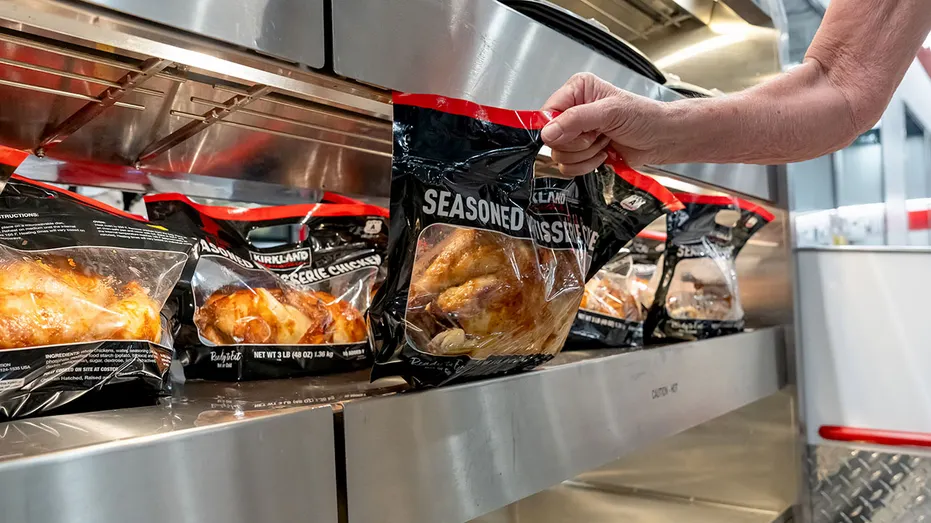
Costco Wholesale Corp. is facing a proposed class-action lawsuit in the United States alleging deceptive marketing practices related to its popular rotisserie chicken, which was advertised as containing “no preservatives.”
The lawsuit was filed in the U.S. District Court for the Southern District of California by two California consumers, Bianca Johnston and Anatasia Chernov, who claim they were misled by in-store signage and online statements suggesting that Costco’s rotisserie chickens were free from preservatives.
According to the complaint, Costco stores displayed signs near rotisserie chicken counters stating “no preservatives,” while the same claim also appeared on the company’s website. The plaintiffs allege that these claims were false and materially misleading, as the product allegedly contains sodium phosphate and carrageenan, both of which function as preservatives.
The suit claims that sodium phosphate is used to slow microbial growth, prevent spoilage and maintain texture, while carrageenan is used to preserve texture and extend shelf life. Although both ingredients are approved for food use by the U.S. Food and Drug Administration (FDA), the plaintiffs argue that their functional role as preservatives contradicts Costco’s marketing claims.
While the ingredients are reportedly listed on the product’s ingredient label, the lawsuit states that the label appears on the back of the packaging and is significantly less prominent than the “no preservatives” messaging displayed at the point of sale. The plaintiffs further argue that the ingredient list does not explain that these substances serve preservative functions.
The plaintiffs allege that they intentionally avoid foods with added preservatives and would not have purchased the rotisserie chicken had they known preservatives were used. The lawsuit also claims that the “no preservatives” representation allowed Costco to charge a price premium, with the rotisserie chicken retailing at $4.99.
“Many consumers prefer products advertised as free of preservatives and reasonably rely on prominent front-of-label and point-of-sale representations when making purchasing decisions,” the lawsuit states.
The complaint estimates that hundreds of thousands, or potentially millions, of consumers could qualify as members of the proposed class action.
According to reports cited in the lawsuit, Costco has since removed the ‘no preservatives’ claim from its website and replaced in-store signage. A spokesperson for Costco was not immediately available for comment.
The plaintiffs accuse Costco of violating multiple consumer protection statutes, including:
The lawsuit seeks unspecified monetary damages, injunctive relief and other remedies.
The case follows a growing wave of litigation targeting food companies over labeling and marketing claims. The lawsuit references a 2023 case against Aldi, which alleged misleading “naturally flavored” claims on cereal bars that reportedly contained artificial flavorings. Other recent lawsuits have similarly focused on the use of citric acid, an ingredient that can serve both preservative and flavoring functions.
As the case proceeds, it is expected to draw increased scrutiny toward labeling practices and the interpretation of “no preservatives” claims in prepared and ready-to-eat foods.