
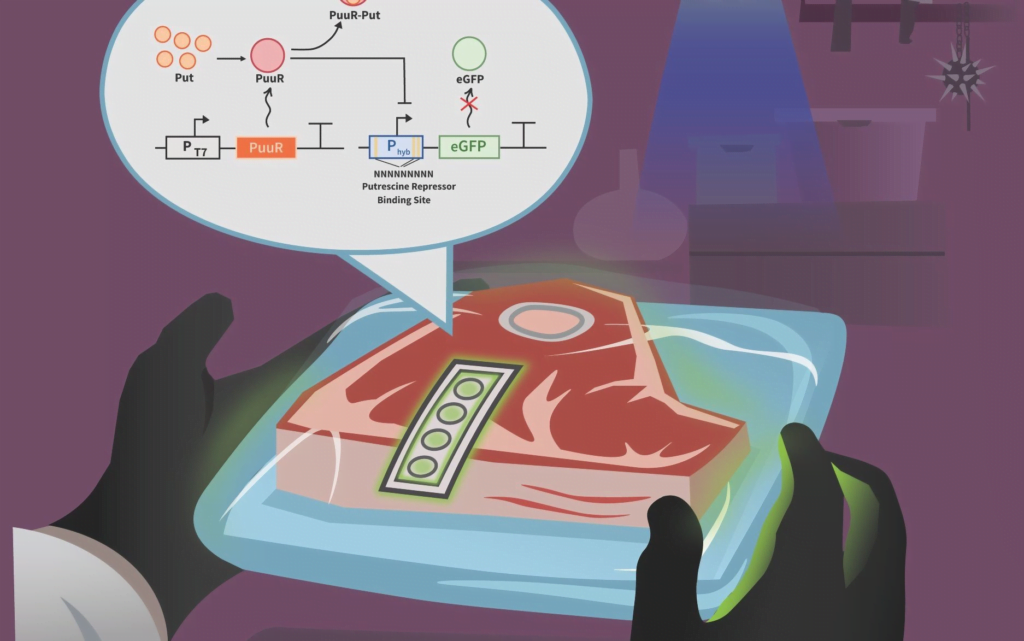
The global meat supply chain is diverse and complex, and as a result, meat deterioration becomes a very serious issue for food producers, vendors, and consumers when delays in one region of the world can cause transit delays across an ocean and a continent.
A team of Concordia researchers developed a novel, low-cost, accurate, and user-friendly system. The system detects the presence of the toxin putrescine in cattle in order to increase food safety. Putrescine is responsible for the foul odors of putrefying meats. If taken in large quantities, can cause headaches, vomiting, diarrhea, and heart palpitations. it has been related to an increased risk of colorectal cancer.
Efficiency:
Cell-free protein synthesis creates a protein utilizing biological machinery without actually needing a real cell, which is the basis for the sensor’s manufacturing process. The scientists discovered that putrescine could be detected using the putrescine repressor protein PuuR, which is present in E. coli bacteria.
To check the efficiency in presence of UV light, it was added to the cell-free system that was producing the repressor in a solution and placed on a paper device. After an hour, the scientists discovered that the biosensor was picking up putrescine and after four hours, they were certain that their measurements were accurate.
After that, they tested actual meat samples. To determine how much putrescine accumulated over a span of several days, small beef slivers were kept in the freezer at ambient temperature. The putrescine levels in the samples from the freezer and refrigerator were surprisingly low while those stored at room temperature revealed high amounts, which would be enough to make anyone who ate them ill.
For further information related to this news, please visit the following link.
https://www.concordia.ca/news/stories/2022/12/06/rotten-meat-could-be-easier-to-detect-thanks-to-a-new-biosensor-system-developed-at-concordia.html: A new biosensor technology developed at Concordia University may make it easier to detect rotten meat.