
Iodine is an essential trace element required by the human body for the production of thyroid hormones, which regulate metabolism, growth, and brain development. Despite its small daily requirement, iodine plays a vital role in maintaining overall health.
However, both iodine deficiency and excess iodine intake can lead to health complications. While deficiency remains a major public health concern in many parts of the world, some individuals are particularly sensitive to high levels of iodine and may experience adverse effects if exposed to large doses — especially through supplements, seaweed, or iodine-based medical substances.
Maintaining the right balance of iodine intake is therefore critical for population health and for individuals with thyroid or iodine sensitivity concerns.
Iodine is needed for the synthesis of the thyroid hormones thyroxine (T4) and triiodothyronine (T3). These hormones influence a wide range of biological functions, including:
When dietary iodine intake is insufficient, the thyroid gland enlarges in an attempt to capture more iodine from the bloodstream, leading to goitre. Severe deficiency during pregnancy can cause cretinism, impaired brain development, and other irreversible effects in the fetus.
According to the World Health Organization (WHO) and UNICEF, the recommended daily iodine intake varies with age and physiological condition:
| Population Group | Recommended Iodine Intake (µg/day) |
|---|---|
| Infants (0–5 years) | 90 |
| Children (6–12 years) | 120 |
| Adolescents & Adults | 150 |
| Pregnant Women | 250 |
| Lactating Women | 250 |
(µg = micrograms, i.e., one-millionth of a gram)
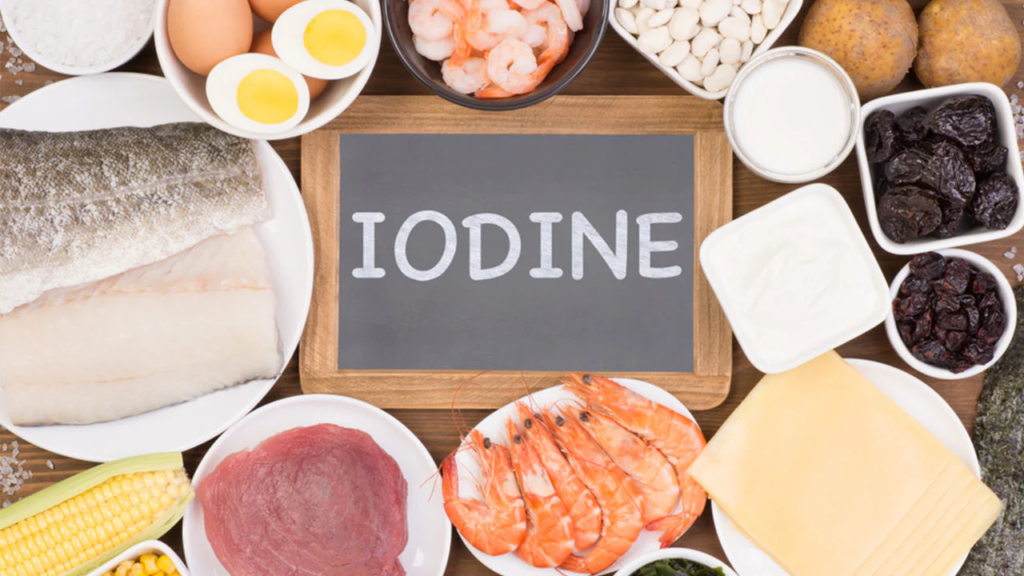
Most people meet their daily iodine needs through iodised salt, dairy products, eggs, seafood, and certain grains. Countries with national salt iodisation programs have seen a dramatic reduction in iodine deficiency disorders over the past decades.
While iodine is essential, a small number of individuals are sensitive to excessive iodine intake. Sensitivity is not the same as an allergy; rather, it refers to an abnormal reaction when the body is exposed to iodine levels far higher than normal dietary amounts.
People with iodine sensitivity may experience symptoms such as skin rashes, burning sensations, or swelling, usually in response to iodine-rich medications, antiseptics, or radiographic contrast agents. These reactions are extremely rare and generally occur only at very high exposure levels — much higher than what’s obtained from food or mandatory fortification programs.
Even individuals with mild iodine sensitivity can generally tolerate normal dietary iodine intake, including foods fortified with iodine. For example, mandatory iodine fortification of salt or bread typically increases iodine intake by only 40–60 µg per day — roughly equivalent to the amount of iodine in a large glass of milk. Such levels are considered safe for the general population.
The thyroid gland is particularly sensitive to iodine fluctuations. For most people, moderate increases in iodine intake pose no risk. However, individuals with existing thyroid conditions may react differently.
For most thyroid patients under regular medical care, the modest increase in iodine from mandatory fortification or common dietary sources is unlikely to cause harm and can be safely managed through routine monitoring.
Certain foods contain naturally high levels of iodine and may need to be avoided or limited by iodine-sensitive individuals. These include:
It’s important to remember that these foods are nutritious and should not be eliminated without professional guidance.
If you believe you may be sensitive to iodine, consult your doctor or an endocrinologist. A clinical evaluation is necessary to determine whether iodine is indeed the cause, as food reactions can sometimes be misattributed.
If confirmed, your doctor or a registered dietitian can help design a balanced diet that avoids high-iodine foods while still meeting your nutritional needs. Avoiding iodine entirely without guidance can lead to deficiency, which carries its own serious health risks.
Public health authorities around the world face the challenge of ensuring adequate iodine intake across the population without exceeding safe levels. Universal salt iodisation (USI) remains the most successful global strategy, recommended by WHO and UNICEF, and has proven safe for nearly all population groups.
In regions where fortification is implemented, the increase in daily iodine intake is typically modest and designed to correct deficiency without causing excess. Continuous monitoring of population iodine status, through urinary iodine concentration surveys, helps countries maintain this delicate balance.
Iodine is a critical nutrient, and maintaining the right intake is essential for thyroid health, growth, and development. While a few individuals may be sensitive to high iodine levels, the amounts added through food fortification or normal diets are safe for nearly everyone.
People with known thyroid conditions or suspected sensitivities should always follow professional medical advice. For the general public, consuming a balanced diet with adequate but not excessive iodine — through iodised salt, dairy, eggs, and seafood — remains one of the simplest ways to support lifelong health.