Swiss food and beverage major Nestlé is facing the biggest baby formula recall in its history, spanning more than 60 countries, after concerns over possible contamination with cereulide, a heat-resistant toxin produced by certain strains of Bacillus cereus. The crisis has prompted a public apology from Nestlé’s CEO and raised serious questions about food safety oversight, transparency, and corporate accountability in the global infant nutrition sector.
Nestlé CEO Philipp Navratil issued a video apology to parents and caregivers, acknowledging the uncertainty and distress caused by the recall. He stated that the company understands the concern among families and reiterated that infant safety remains Nestlé’s top priority. According to Nestlé, the recalls were announced progressively across affected countries in line with official guidelines and are now complete.
The recall was triggered by a quality issue detected in December at a Nestlé factory in the Netherlands. Navratil explained that the issue originated from a raw ingredient supplied by a third party. After discovering the problem, Nestlé halted sales of the affected products and, in coordination with regulatory authorities, initiated voluntary recalls in several European countries. At the start of January, the recall was expanded to all affected markets worldwide.
Nestlé has stressed that, so far, there have been no confirmed cases of illness directly linked to the recalled products.
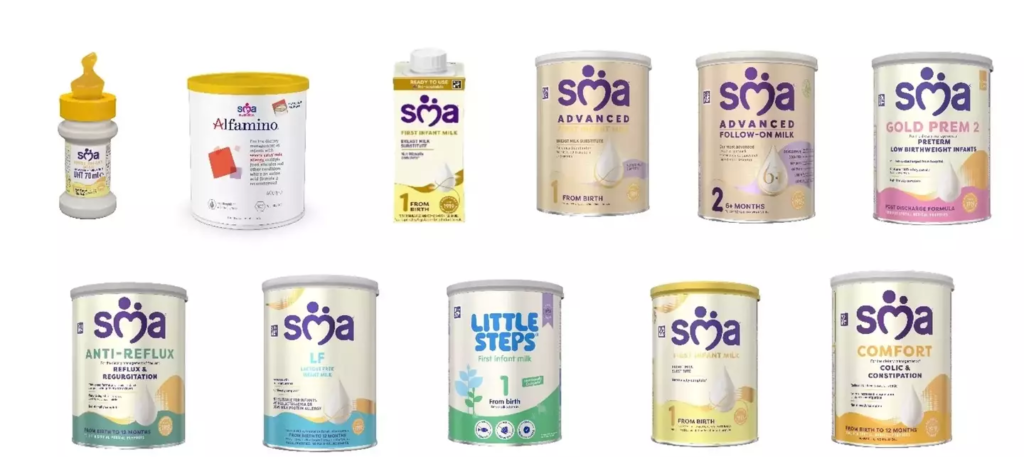
The recall covers specific batches of infant, follow-on, pre-term and specialised formulas sold under well-known brands such as Beba, SMA, NAN and Alfamino. Authorities in Austria have described the action as the largest recall in Nestlé’s history, reportedly affecting more than 800 products from over 10 Nestlé factories, although Nestlé has not formally verified this figure.
The recall spans Europe, parts of the Americas, Asia, Oceania, and the Middle East and North Africa region. Countries and regions affected include:
Parents and caregivers in affected markets have been urged to stop using the specified batches immediately and return them to retailers.
Authorities have indicated that the contamination was linked to a cleaning defect at a supplier’s facility, which affected an oil used as an ingredient in infant formula. The oil reportedly contained cereulide, a toxin that is resistant to heat and chemical treatment.
Cereulide is produced by certain strains of Bacillus cereus. When ingested, it can cause nausea and vomiting, and scientific literature suggests it may also lead to more severe, multi-organ complications in some cases. Symptoms associated with exposure can include abdominal pain, stomach cramps, watery diarrhoea, nausea and vomiting.
Nestlé has stated that powdered infant formula is not sterile by nature but emphasised that strict manufacturing controls are designed to minimise risks. However, critics argue that this incident highlights deeper systemic weaknesses.
Nestlé has indicated that the source of the contamination was linked to arachidonic acid (ARA) oil supplied by a third-party manufacturer. Initially, the company did not publicly name the supplier, later identified by external sources as Cabio Biotech, a Chinese company based in Wuhan.
Critics, including food safety advocates, argue that regardless of supplier involvement, Nestlé remains fully responsible for the microbiological safety and quality of both ingredients and finished products. They stress that infant formula manufacturers are expected to maintain rigorous supplier verification, auditing, and monitoring systems, alongside regular inspections by independent authorities.
ARA is naturally present in breastmilk but is an optional, not mandatory, ingredient in infant formula under European Union regulations. All first infant formulas are legally required to meet mandatory nutritional standards and be nutritionally equivalent. Advocacy groups note that companies often use optional ingredients such as ARA to market formulas as being “closer to breastmilk” and to justify premium pricing, despite limited independent evidence supporting such claims.
Consumer organisations, including FoodWatch, have accused Nestlé and some authorities of delays and insufficient transparency. According to FoodWatch, Dutch authorities were notified of potential contamination on December 9, following laboratory tests conducted on November 26. However, public recalls in some countries reportedly occurred weeks later.
Austrian authorities have alleged that Nestlé carried out a “silent” recall during the Christmas period before issuing public warnings. FoodWatch has criticised this approach, stating that silent recalls may protect corporate reputation but do not adequately protect consumers, particularly when infants are involved.
Nestlé has responded by stating that it acted in accordance with regulatory requirements and out of an abundance of caution, maintaining that no confirmed illnesses have been reported. Nonetheless, reports circulating on social media, including on brand-associated platforms, have contributed to anxiety and confusion among parents.
Nestlé has said that the recalled batches account for well under 0.5% of its annual sales and that the financial impact is not expected to be significant. However, analysts have warned that reputational damage and shaken consumer confidence could affect sales, potentially benefiting competitors such as Danone.
Some analysts estimate the company’s exposure could be as high as US$1.3 billion, disputing Nestlé’s own assessment. Since the recall began expanding, Nestlé’s share price has fallen further, adding to a longer-term decline of around 42% from its record high in January 2022.
Infant nutrition forms part of Nestlé’s Nutrition and Health Science division, which accounts for approximately 16.6% of the company’s total US$101 billion sales in 2024.
The International Baby Food Action Network (IBFAN) has used the incident to renew calls for stricter oversight of powdered infant formula production and marketing. At the recent Codex Committee on Food Hygiene, IBFAN successfully pushed for an urgent revision of the 2009 Code of Hygienic Practice for Powdered Formulae for Infants and Young Children, arguing that existing guidance focuses mainly on Cronobacter and Salmonella and is inadequate for risks posed by Bacillus cereus.
IBFAN is also calling for updates to the 2007 WHO Guidelines on the safe preparation, storage and handling of powdered infant formula, which were originally developed following a 2005 World Health Assembly resolution warning about intrinsic contamination risks.
Advocacy groups further argue that idealising and misleading marketing of breast-milk substitutes, particularly through digital platforms and cross-border online sales, undermines informed decision-making by parents and increases dependence on products that carry inherent risks.
This recall has intensified long-standing criticism of Nestlé. The company, the world’s largest packaged food manufacturer, has faced decades of scrutiny over food safety, marketing practices, human rights, environmental issues, and compliance with international baby food marketing standards.
IBFAN, which has monitored Nestlé’s practices for over four decades, continues to accuse the company of failing to fully comply with United Nations and World Health Assembly recommendations on infant feeding. Nestlé has also faced allegations related to ultra-processed foods, environmental damage, labour practices, and double standards in product formulation across markets.
Former Nestlé Global Director of Food Safety Yasmine Motarjemi, now a whistleblower, has previously criticised the company’s internal food safety culture, alleging that commercial considerations often outweighed consumer health concerns. Her criticisms, published in books and professional journals, are frequently cited by campaigners questioning Nestlé’s claims of trustworthiness.
Nestlé has long marketed itself as being “trusted by mothers throughout the world.” The scale of this recall, the questions surrounding supplier oversight, and the criticisms over transparency have significantly challenged that narrative. As regulators, advocacy groups and consumers scrutinise the company’s response, the incident is likely to have lasting implications not only for Nestlé, but for global standards governing infant formula safety, surveillance and marketing.