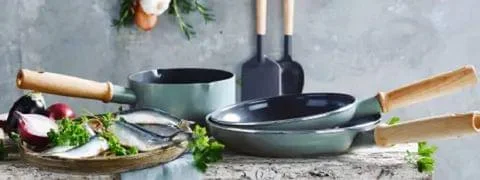
Non-stick cookware is widely used and trusted across kitchens around the world, including in Indian households. Its convenience, easy cooking, easy cleaning, less oil — has made it a staple. But over the years, concerns have been raised about the chemicals involved in non-stick coatings (especially PFAS), potential long-term health effects, and safe cooking practices. This article aims to present the scientific evidence, known risks, and practical guidance so you can make an informed decision about whether and how to use non-stick cookware safely.
Understanding the Terminology: PFAS, PTFE, PFOA
PFAS (per- and polyfluoroalkyl substances): A large family of synthetic chemicals used in many industrial and consumer products (from non-stick coatings to water-repellent fabrics). PFAS are sometimes called “forever chemicals” because they are persistent in the environment and human body.
PTFE (Polytetrafluoroethylene): A specific fluoropolymer widely used for non-stick coatings. The well-known brand name for PTFE is Teflon. PTFE gives cookware its characteristic non-stick surface.
PFOA (Perfluorooctanoic acid): A type of PFAS that was historically used in the production of PTFE coatings. Because of environmental and health concerns, major cookware manufacturers phased out PFOA many years ago.
What Scientific Evidence and Experts Say
What seems reasonably safe under typical use
According to multiple safety reviews, when PTFE-coated cookware is used as intended (on low to medium heat, without overheating or scratching), the risk of transferring harmful fluorinated substances into food is very low.
In particular, PFOA the chemical that frightened many when PFAS worries first emerged — has largely been eliminated from modern non-stick cookware (since ~2013).
Experts and regulatory reviews indicate that using non-stick pans at normal cooking temperatures (for everyday tasks like frying eggs, sautéing vegetables, stir-frying) is generally considered safe.
What can go wrong and under what conditions
However, there are situations where non-stick cookware can pose health risks or at least raise reasonable concern:
Overheating is a primary concern: If PTFE-coated pans are heated to very high temperatures — for instance, above ~260 °C (≈ 500 °F) and especially beyond ~350–400 °C — the coating may begin to degrade and release toxic fumes. These fumes can trigger “polymer fume fever” (sometimes called “Teflon flu”) — a temporary flu-like illness (fever, chills, cough, respiratory irritation) in humans, and can be lethal to birds.
Damaged or degraded coating: If the non-stick surface is scratched, chipped, or peeling — often due to metal utensils, abrasive cleaning, or wear over time — flakes or micro-/nano-particles may mix with food. The long-term health implications of ingesting such particles remain unclear.
Manufacturing and environmental concerns: Even though PFOA has been phased out, PTFE is still a PFAS-based fluoropolymer. The production process of PTFE and other PFAS-based coatings has historically contributed to environmental contamination (water, soil) in many parts of the world — this is an ecological concern beyond the immediate user risk.
Uncertainty over long-term exposure: Science does not yet have definitive long-term data on regular ingestion or inhalation of small amounts of fluorinated compounds or microscopic PTFE particles over decades. Some experts argue that occasional exposure (with correct use) is unlikely to cause harm, but cumulative exposure from cookware — along with PFAS in food packaging, water, environment — is still a valid concern.
In short: The risk is real, but it’s largely tied to improper use (overheating, damaged pans) rather than typical everyday cooking.
Practical Tips for Safe Use of Non-Stick Cookware
Here’s a simple checklist for homeowners who use (or plan to use) non-stick cookware, to minimize risk:
Use on low or medium heat only — avoid high flames and never preheat an empty non-stick pan.
Avoid overheating — do not let the pan smoke, burn oil, or sit empty on a hot stove.
Use appropriate utensils — avoid metal spatulas or sharp utensils; prefer wooden, silicone or nylon to prevent scratching.
Avoid abrasive cleaning — do not scour or scrub the coating harshly; gentle cleaning with soft sponge/cloth is ideal.
Inspect regularly; replace if damaged — if the coating shows visible scratches, chips, peeling or flaking, it’s time to discard or replace the pan.
Ensure good kitchen ventilation — especially in Indian kitchens where ventilation may be minimal; switch on exhaust fans or open windows while cooking.
Use non-stick for appropriate cooking only — use it for gentle cooking (eggs, light stir-fry); for high-heat searing, deep frying, or browning, prefer stainless steel or cast iron.
Buy good-quality and transparently labeled cookware — prefer brands that clearly label coating type and ensure the product is “PFOA-free.”
What Are Some Alternatives, And Their Tradeoffs
If you want to minimize PFAS exposure or avoid non-stick coatings entirely, there are several widely used alternatives — each with pros and cons:
Stainless steel: Durable, safe at high heat, easy to clean, inert. Needs more oil, and good cooking technique to avoid sticking.
Cast iron / Carbon steel: Retains and distributes heat well, can be seasoned to develop a natural “non-stick” patina, ideal for frying, searing, slow cooking. But heavy, needs maintenance (seasoning, drying to avoid rust), and reacts with very acidic foods if seasoning is poor.
Ceramic-coated cookware (PFAS-free non-stick): Marketed as safer/non-toxic alternatives; good for low-to-medium heat cooking. However, coating quality and durability vary widely; some may degrade faster than PTFE. Also, long-term performance uncertain.
Glass or enameled cookware: Safe and inert, but not always ideal for frying and not truly non-stick.
Each alternative comes with trade-offs — convenience, durability, maintenance, heat-handling. The optimal choice may depend on your cooking style, frequency, and level of concern.
What Is Still Uncertain / Being Researched
Long-term effects of very low-level PFAS exposure — even though PFOA is mostly phased out, PTFE remains a PFAS-based material; whether repeated exposure over decades (via cooking, fumes, tiny particles) poses cumulative risk is still under study.
Shedding of micro- and nano-particles — when non-stick coatings age, scratch or degrade, tiny particles may end up in food or air. The health implications of ingesting or inhaling such particles remain uncertain.
Lifecycle and environmental impact — manufacturing, disposal, and environmental persistence of PFAS-based coatings raise concerns beyond individual kitchen use. PFAS are “forever chemicals,” and non-stick cookware contributes to their production and eventual environmental circulation.
Regulation and industry practices — while many major manufacturers have moved away from PFOA, the supply chain, quality control (especially in low-cost cookware markets), and transparency about coatings remain variable globally.
Conclusion, Balanced, Informed, Practical
Non-stick cookware especially modern PTFE-coated pans — can be a reasonably safe tool for everyday cooking if used properly: low/medium heat, no overheating, gentle handling, good ventilation, and timely replacement when the coating degrades.
The big worries (cancer, chronic disease) linked to PFAS mostly stem from PFOA, which has largely been phased out. What remains is a manageable risk , primarily from overheating or misusing the cookware, or long-term environmental effects of PFAS.
If you cook regularly at high heat, or want to minimize any PFAS-related exposure, using alternatives (stainless steel, cast iron, ceramic, glass) makes sense. Ultimately as with many things, risk depends on use and context.
Source Links
“Is Nonstick Cookware Like Teflon Safe to Use?” — Healthline Healthline
“What are the concerns about Overheating Non-stick Pans?” — ABC News / RMIT chemistry discussion ABC
“Leading surgeon reveals how non-stick cookware can impact your health” — Times of India The Times of India
“Are Non-Stick Pans Toxic? What You Need to Know.” — LiveStrong Livestrong
“Why Nonstick Pans Are a Hot Mess” — National Resources Defense Council (NRDC) overview NRDC
2025 Safety Review (PTFE non-stick coatings, BfR) — “No adverse health effects expected when used properly.” Bundesinstitut für Risikobewertung
“What’s Cooking? PFAS and Other Chemical Hazards in Nonstick Cooking and Baking Pans” — Ecology Center report ecocenter.org+1
“Are non-stick pans safe? Experts explain everything you need to know” — IdealHome / media coverage Ideal Home+1